THREAT REPORTS
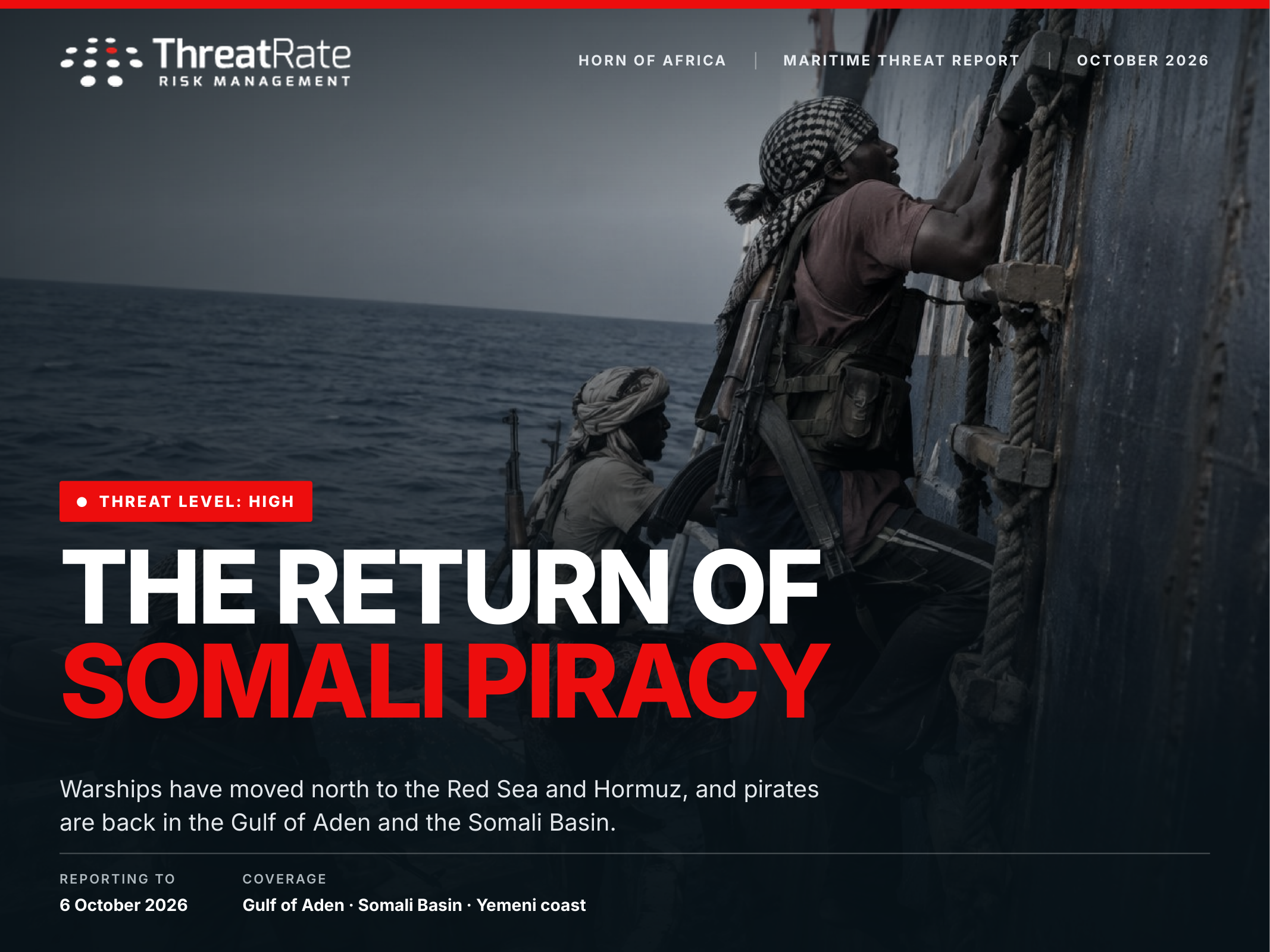
The Return of Somali Piracy
ThreatRate’s maritime threat assessment of the comeback of Somali piracy, as of 6 October 2026. Incidents have nearly tripled from 2025 and are at their highest level since 2013. The report explains how the shift of warships to the Red Sea and the Strait of Hormuz left the Horn of Africa unguarded, covers this year’s hijackings, ransoms and the first crew deaths in over a decade, and gives an outlook and security guidance for ship operators ahead of the October–November peak-risk window.
Read More Read Less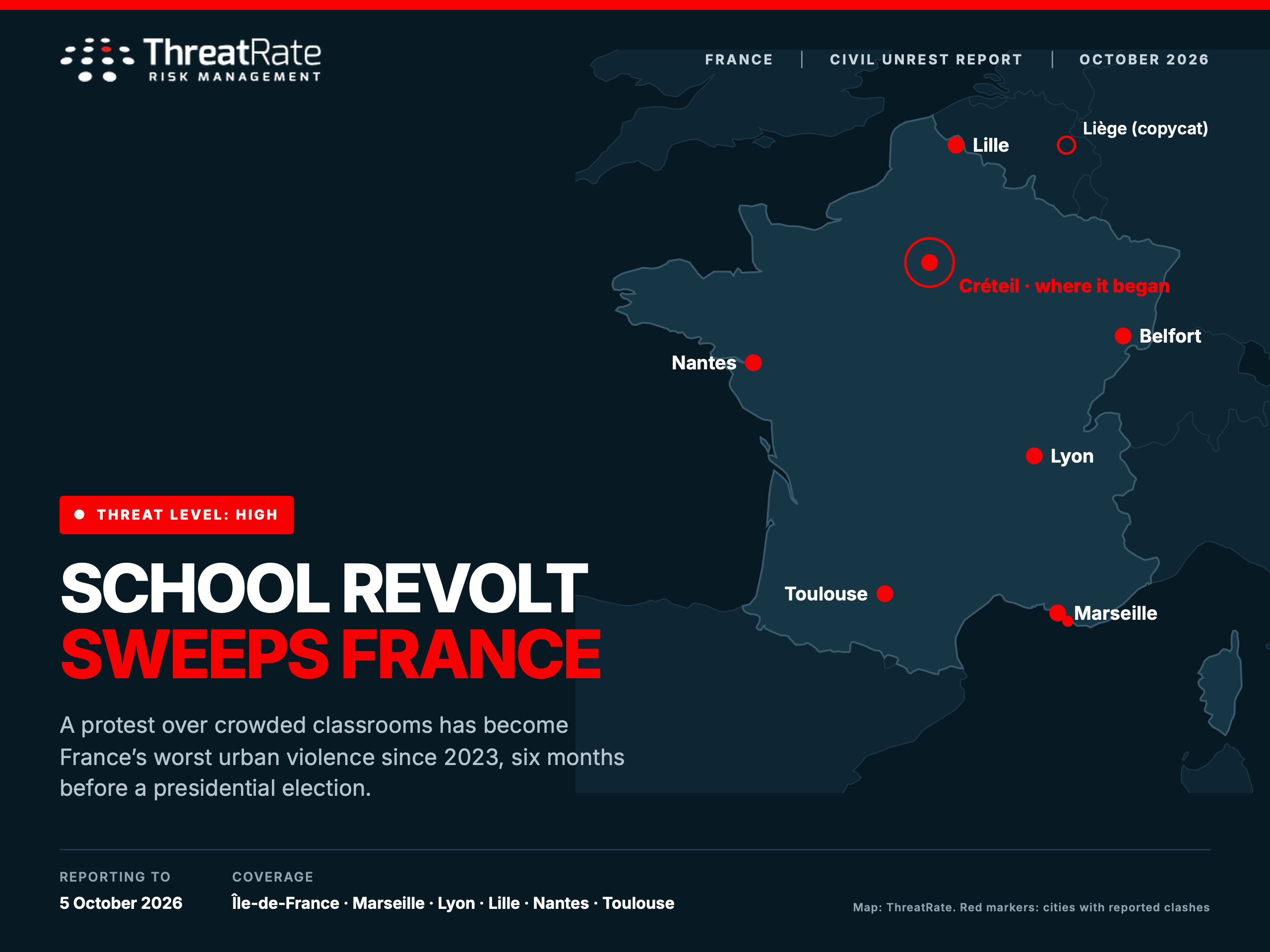
Scool Revolt Sweeps France
The article examines the wave of student unrest that has swept France since late September 2026, when lycée blockades over teacher shortages, overcrowded classrooms and run-down buildings began in Créteil and spread to more than 1,200 high schools nationwide. It traces the movement's escalation into arson, attacks on staff and daily clashes with police, which have resulted in over 5,000 arrests, and the political battle over the government's claim that far-left groups have instrumentalised the protests six months before the 2027 presidential election. The report assesses the financial toll, with more than €40 million in damage to schools and the cost being shifted onto families and insurers and places the unrest in the context of France's past mass violent protests, from 1986 and 2005 to the Gilets Jaunes and the 2023 riots. It also outlines likely scenarios for the coming weeks and provides operational guidance on schools, demonstrations, transport and business continuity.
Read More Read Less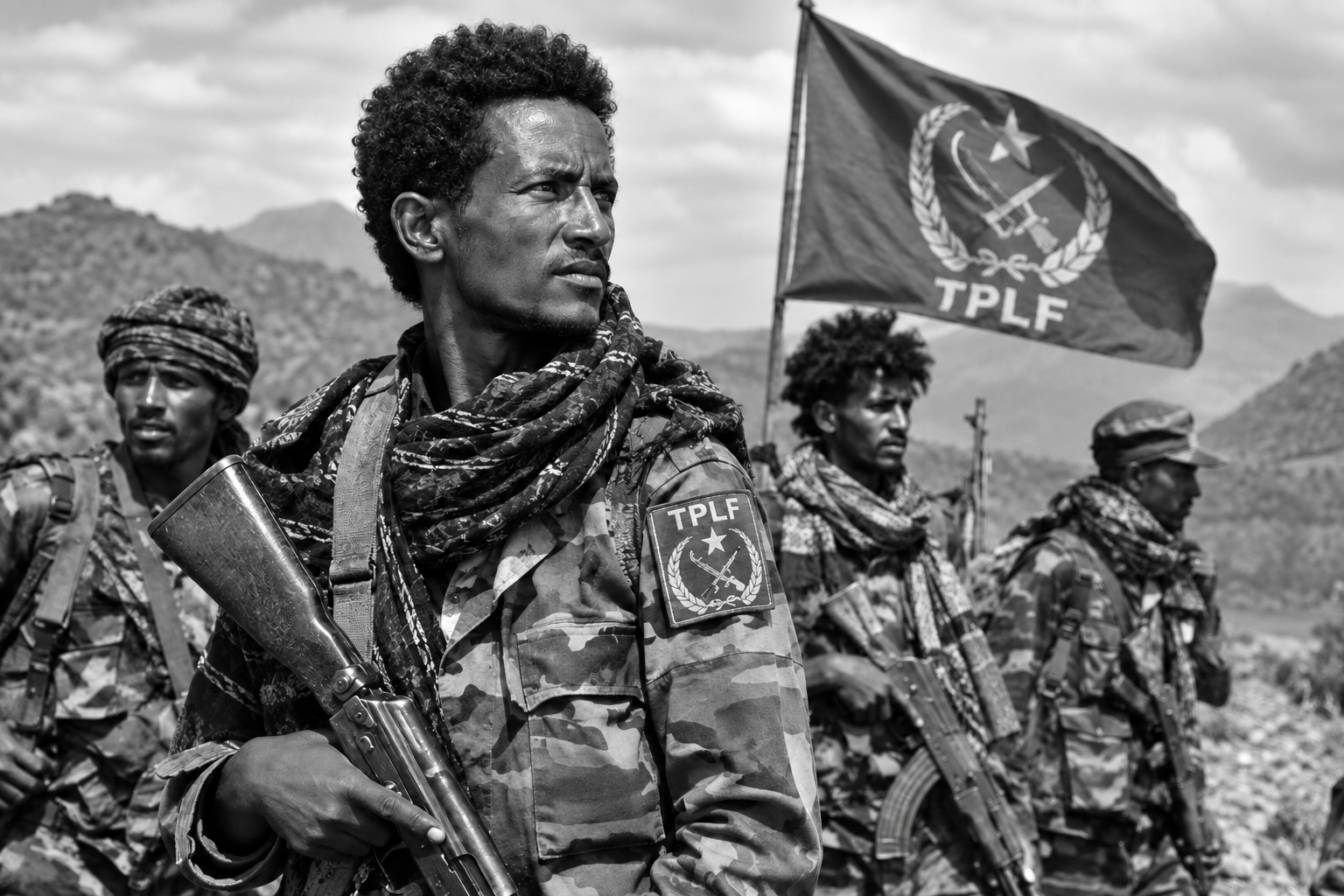
Renewed War in Northern Ethiopia
The article examines the renewed war in northern Ethiopia following the resumption of open fighting between Ethiopian federal forces and Tigrayan forces on 22–23 September 2026. It traces the collapse of the Pretoria peace agreement, the emergence of a new alliance linking the TPLF with Fano and other regional armed groups, and the resulting shift in Ethiopia’s conflict dynamics. The report assesses the risk of a prolonged war across Tigray, Afar and Amhara, while highlighting the potential involvement of Eritrea and the threat to the strategic Addis Ababa–Djibouti corridor. It also considers the humanitarian, regional and operational implications, including displacement, disrupted air travel and communications, supply chain risks, and increased kidnapping and security threats.
Read More Read Less